
The Light From Africa Foundation’s (LFA) Community Food Garden Project was initiated in June 2020 in response to the COVID-19 pandemic, at a time when food insecurity placed immense strain on households across the Western Cape. What began as an emergency response has since evolved into a long-term, sustainable food security initiative rooted in dignity, empowerment, and self-sufficiency.
Rather than relying solely on food hamper distribution, LFA adopted an approach that equips households and communities to grow their own food. By supplying vegetable seedlings and compost, the project empowers families, schools, and community organisations to cultivate home and communal gardens—creating lasting impact beyond immediate relief.
From Seedlings to Self-Sufficiency


Since its inception, the Community Food Garden Project has distributed 135,200 vegetable seedlings across rural and urban communities in the Overberg and the Cape Metropole. To date, the project has directly supported:
- 145 home food gardens
- 6 school food gardens annually
- 4 NGOs annually
- 3 community gardens annually
- 1 soup kitchen annually
Many of LFA’s partners support home gardens, soup kitchens, and early childhood development (ECD) centres as part of their broader food garden programmes. Collectively, these gardens contribute directly to household nutrition, community feeding schemes, and local food resilience—particularly in communities most vulnerable to economic shocks.
Strengthening Partnerships for Greater Impact

The growth of the Community Food Garden Project has been driven by meaningful partnerships, all of which are actively involved in soup kitchens and feeding schemes, with a shared commitment to supporting food-insecure families and communities.
Since the project’s launch in 2020, initially in collaboration with Suurbraak Aquaponics, several schools have joined the initiative. These include Suurbraak Primary School, Mullersrus Primary School, Athwood Primary School in Hanover Park, Heathfield Primary School, and Fairmount High School in Grassy Park. Vegetables harvested from these school gardens are used directly in each school’s soup kitchen, strengthening food security for learners and their families.
Community gardens and NGOs that have joined the initiative since its inception include Trust House in Suurbraak, Uitreikende Hande in Buffeljagsrivier, Gwari Kamp in Barrydale, Rise Above in Lavender Hill, Masiphumelele Creative Hub in Ocean View, Ikhaya le Themba (Home of Hope) in Imizamo Yethu, Hout Bay, and Baphumelele in Philippi.
Spotlight on Suurbraak Primary School


One of the Community Food Garden Project’s most consistent and impactful partnerships is with Suurbraak Primary School, a long-standing collaborator in LFA’s work in the Overberg region. What makes this partnership particularly meaningful is the way the school’s food garden is integrated into a broader ecosystem of support, learning, and youth development.
Through the Community Food Garden Project, Suurbraak Primary School receives vegetable seedlings and compost to maintain its school garden. The vegetables grown are used directly in the school’s soup kitchen, contributing to daily meals for learners and strengthening food security within the school community.
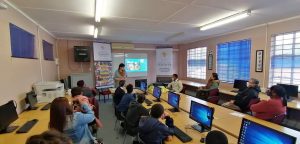
Beyond food security, LFA’s partnership with Suurbraak Primary School extends across several programmes. Learners and educators are supported through computer literacy initiatives, the LFA Library Project, art enrichment programmes, and youth development activities. Together, these interventions reflect LFA’s holistic approach—recognising that children thrive when their nutritional, educational, creative, and developmental needs are addressed in an integrated way.
By working consistently with Suurbraak Primary School over time, LFA is able to deepen impact, build trust, and respond to evolving needs within the community. The food garden is not a standalone intervention, but part of a wider, connected model that supports learning, wellbeing, and opportunity for young people.
This partnership illustrates how sustainable food initiatives, when embedded within broader education and youth development programmes, can strengthen resilience and create lasting change at a community level.
Looking Ahead: Returning to Our Roots


As the project continues to grow, LFA is returning to where it all began by once again collaborating with Suurbraak Aquaponics to prepare seedlings for rural home gardens and selected community gardens. This renewed partnership will not only ensure a steady supply of much-needed vegetable seedlings, but will also support a local NGO and create work opportunities for women and youth.
It is a model that reflects LFA’s commitment to sustainable development, local collaboration, and long-term impact.
By growing food, LFA continues to grow resilience, dignity, and opportunity—one seedling at a time.